
The Reason It Keeps Coming Back
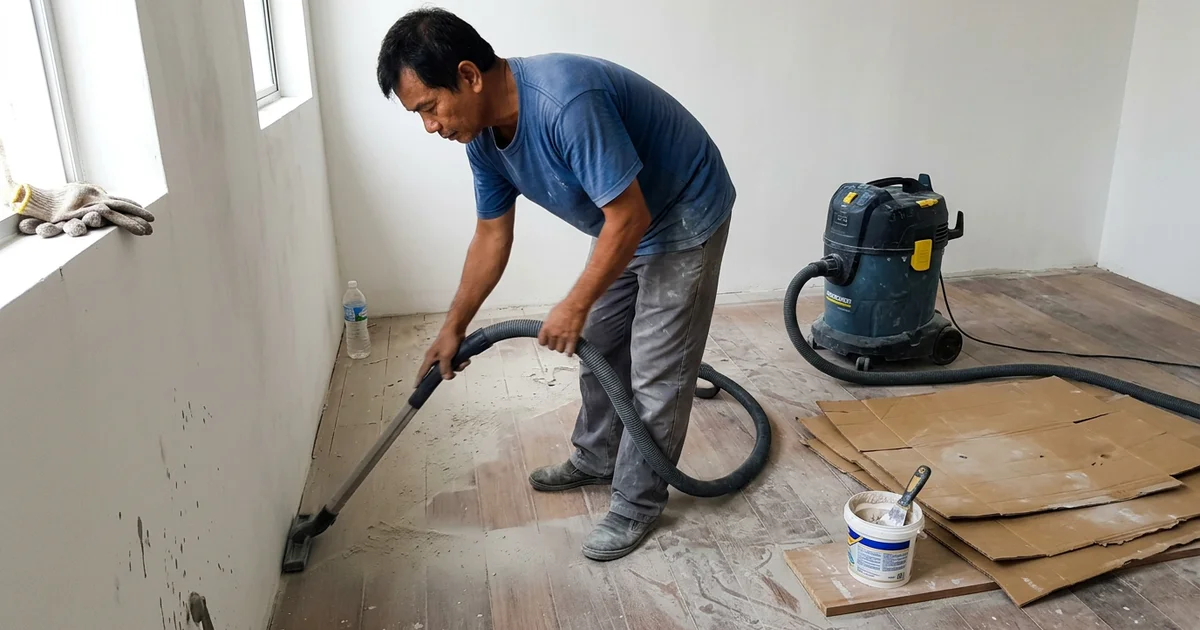
People assume post-renovation dust is stubborn because there’s a lot of it. That’s not the problem. The problem is the size of the particles.
Ordinary household dust is heavy enough to stay where it lands. Cement, plaster and gypsum dust produced by cutting, drilling and sanding is ground much finer. Particles at that size behave more like smoke than grit: they stay suspended in air for hours, drift on the smallest air current, and settle slowly across every horizontal surface in the property.
So when you sweep, you’re not removing dust. You’re launching it. It lifts, you leave the room satisfied, and over the next few hours it lands again — on the surfaces you just cleaned, plus the ones you hadn’t got to yet.
That single mechanism is why a DIY clean after renovation feels like it never ends, and why post-renovation cleaning is priced as a specialist job rather than a long general clean.
Why a Household Vacuum Doesn’t Fix It Either
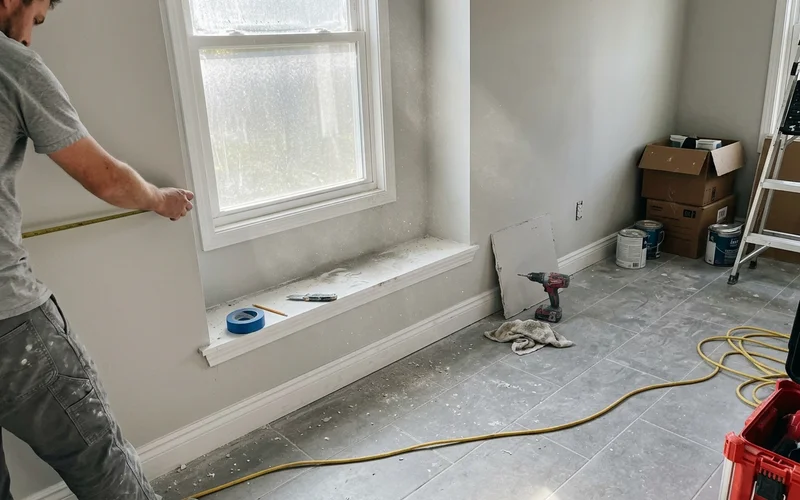
This surprises people more than the broom part. A standard home vacuum picks up what you can see, then blows the finest fraction straight back out through the exhaust.
Domestic filters are designed for hair, sand and food crumbs. Particles well below that size pass through the filter media, past the motor and back into the room, often with enough force to disturb settled dust elsewhere. The floor looks clean. The air is worse than when you started.
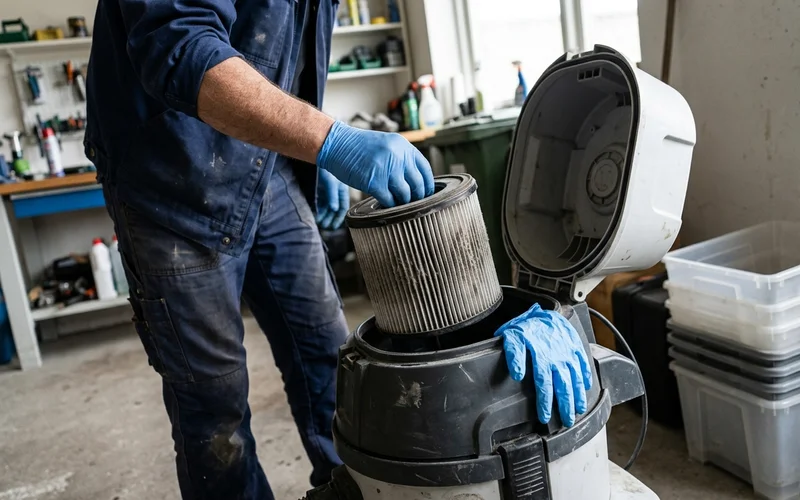
There’s a second issue: capacity. Renovation dust in volume clogs a domestic filter in minutes, and a clogged filter pushes even more through the bypass.
What HEPA Extraction Does Differently
An industrial wet/dry vacuum with HEPA filtration is built for this specific problem.
The filter media is rated to capture particles down to fractions of a micron, which covers the fine fraction that domestic filters miss. The housings are sealed, so air can’t bypass the filter on its way to the exhaust. And the capacity is designed for construction volumes rather than household ones.
The practical result is that dust leaves the property instead of circulating inside it. That’s the entire difference, and it’s why the job finishes rather than repeating.
The Air-Quality Angle
Fine construction dust is an irritant. Cement and gypsum particles in the air affect the nose, throat and airways, and they matter more in a home with children, older family members or anyone with asthma.
It also settles into places you won’t think about until later: air-conditioner filters and coils, ceiling fan motors, curtain fabric, the inside of wardrobes left open during the work.
A quick test for whether your dust is actually gone
Come back the next morning and look across a dark surface at a low angle in daylight. A fresh grey film means the dust was moved, not removed.
Where Domestic Cleaning Still Helps
None of this means you should do nothing. Clearing debris, bagging offcuts, wiping cabinet interiors and washing curtains are all worth doing and don’t need specialist gear.
The line is the fine dust and the cement haze. For the full order of work, our post-renovation cleaning checklist walks through the whole sequence room by room.
What This Means for Your Aircon and Soft Furnishings
The part people discover weeks later is where the dust ended up while it was circulating.
Air-conditioner filters and coils. Fine particulate is drawn straight into the unit the first time you run it. It clogs the filter, coats the coil and cuts cooling performance, which in Ipoh’s heat gets noticed fast. Clean the property properly before running the aircon hard, and check the filters afterwards regardless.
Curtains and upholstery. Fabric holds fine dust rather than shedding it. Curtains hung during or just after renovation usually need washing, and a sofa that sat in the property through the work often needs extraction rather than vacuuming.
Wardrobe and cabinet interiors. Any door left open during the work has a layer inside. It’s out of sight, so it gets missed, and then it transfers onto clothes and linen.
Mattresses. If a bed stayed in the property, it took in dust the same way the curtains did.
Ceiling fans and light fittings. They collect it, then redistribute it the moment you switch them on.
The practical order: extract the dust from the property first, then deal with the fabric items, then run the aircon. Doing it in the other order means cleaning twice.