
What Cement Haze Actually Is
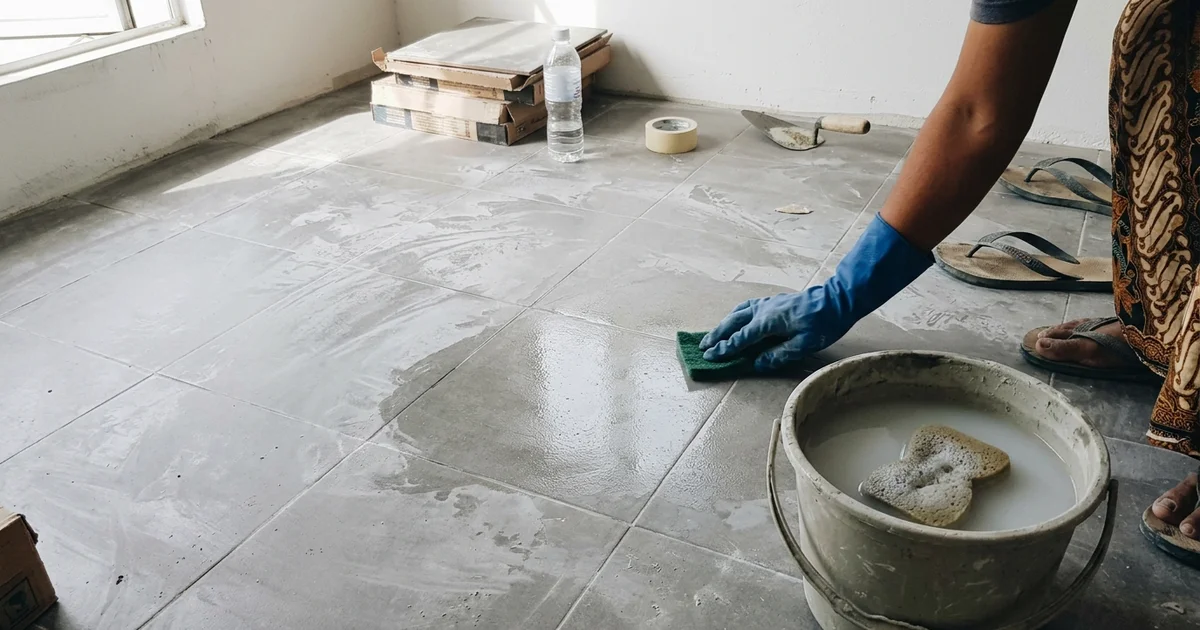
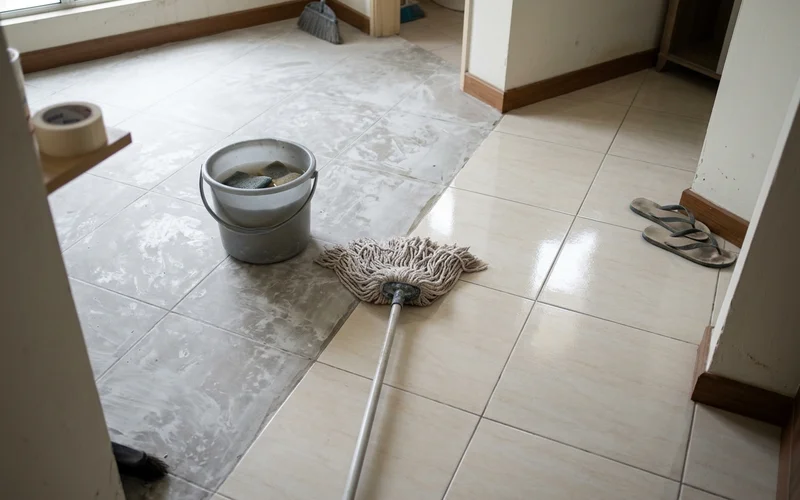
After tiling and grouting, a thin mineral film is left across the tile surface. That’s cement haze. It looks like a grey or white cloudiness, worst in raking light, and it makes brand-new tiles look permanently dirty.
The reason it survives mopping is simple: it isn’t sitting on the tile, it’s bonded to it. Water and detergent slide over the top. What removes it is a mild acid that dissolves the mineral layer, applied at the right dilution and rinsed off before it goes to work on anything else.
This is the single most common reason people call us for post-renovation cleaning rather than attempting it themselves — not the dust, the haze.
Removing Haze From Tiles Safely
The method is straightforward, but the margins matter:
- Vacuum first. Any loose grit turned into slurry becomes an abrasive that scratches the tile.
- Test a hidden area. Behind a door, under where the fridge sits. Wait and check for dulling before committing.
- Wet the tile before applying. A dry tile absorbs the acid unevenly and that’s where patchy etching comes from.
- Work in small sections. A square metre or two at a time, so nothing dries on the surface.
- Agitate gently, then rinse thoroughly. Rinse water gets changed often. Residual acid left in grout lines keeps working after you’ve walked away.
Where to stop: polished marble, natural stone, terrazzo and some polished porcelain don’t tolerate acid at all. If you don’t know what your floor is, don’t guess — that’s a genuinely expensive mistake to reverse.
Paint Splatter on Glass and Frames
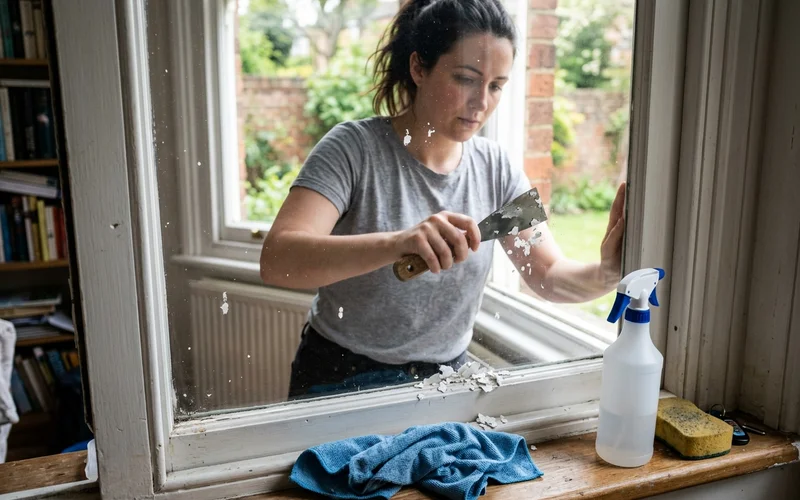
Dried emulsion on window glass is the second most common leftover. It comes off cleanly with a scraper blade, as long as two rules are followed.
First, wet the glass. Soapy water is enough. A blade dragged across dry glass picks up grit and scratches in straight lines that never come out.
Second, keep the blade at a shallow angle, around 30 degrees, and push in one direction rather than sawing back and forth.
On painted frames and skirtings, a blade is too aggressive. Soften the splatter with a solvent on a cloth, let it sit, then lift it rather than grinding at it.
Adhesive Residue and Sealant Overrun
Masking tape left on too long in Perak’s heat leaves a sticky film that collects dust and turns brown. Solvent on a cloth, applied to the residue rather than the surrounding paint, lifts it. Work in from the edges.
Silicon sealant overrun around sinks, sills and shower trays needs cutting rather than scrubbing. A sharp blade run flat along the surface takes the excess bead off in one piece. Picking at it stretches the silicon and leaves a ragged line.
The order that saves rework
Dust extraction first, then haze, then paint and adhesive, then a final wet pass. Doing haze removal before the dust is cleared means you’re grinding fine grit across a wet tile.
When to Hand It Over
Call a professional when any of these apply: you have natural stone or polished surfaces, the haze covers a large floor area, the property is a new handover where damage would be your liability, or you simply don’t want to spend two days on it with a scraper.
We quote post-renovation work free after looking at the property, matching the cleaner to the tile and doing a test patch before touching the main floor. Our guide on how long post-renovation cleaning takes explains how much time haze removal typically adds.
Protecting What You Just Paid For
The reason we’re cautious about this stage is simple: everything you’re cleaning is brand new, and most of the damage we get called to assess was caused during a well-meant DIY clean-up.
Etched tile glaze. Undiluted acid cleaner, or the right dilution left sitting too long, dulls the surface permanently. It shows as a cloudy patch that no amount of polishing brings back.
Scratched glass. Dry scraping is the cause every single time. Wet the pane, keep the blade shallow, replace the blade when it stops gliding.
Stripped paint on frames and skirtings. Solvent applied generously to a painted surface softens the paint as readily as the adhesive. Apply it to the cloth, not the surface, and work in from the edge.
Blown grout. Pressure washing indoors, or scrubbing new grout hard before it has fully cured, opens joints that then need refilling.
Damaged sanitary ware. Abrasive pads on a new acrylic shower tray or basin leave a permanent haze of fine scratches that hold dirt afterwards.
The cheapest insurance available
Test everything in a hidden spot, wait ten minutes, then look at it in good light. That single habit prevents nearly every problem on this list.
If the property is a handover where damage would be your liability, that’s the strongest argument for having it done professionally with the finishes identified first.