
What a General Clean Covers
A general clean is routine maintenance. It keeps a home or office at a consistent standard week to week, and it assumes the space is already broadly in order rather than needing a reset.
Here’s what’s on the list for a standard residential booking:
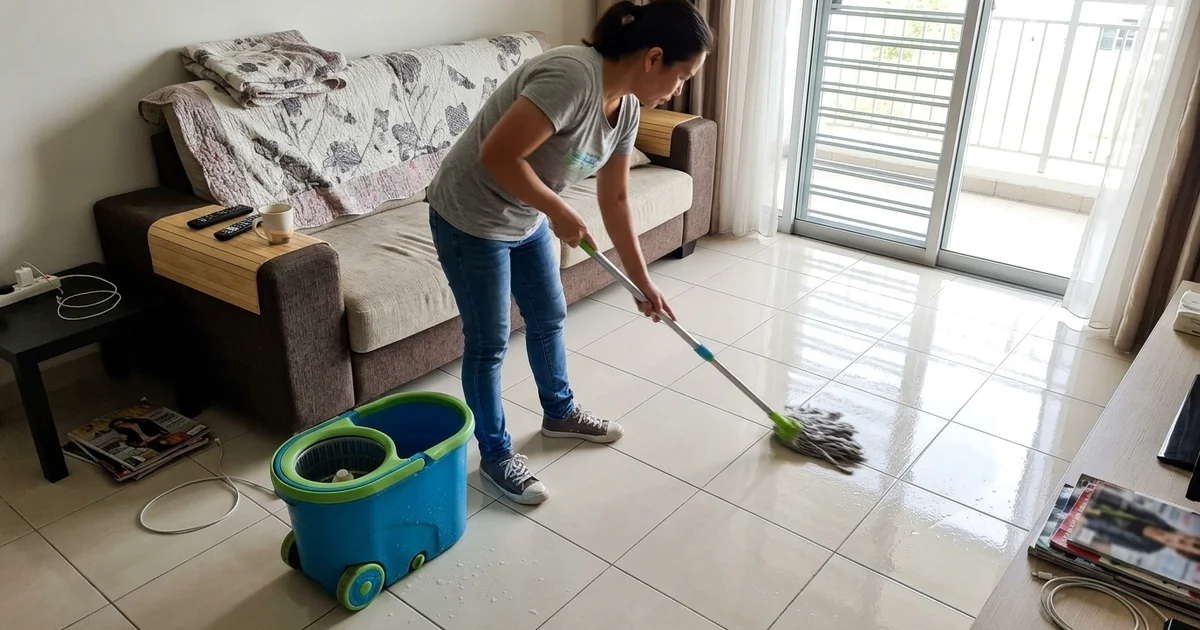
- Living areas and bedrooms — dusting surfaces and furniture, wiping down accessible ledges, tidying, sweeping and mopping floors
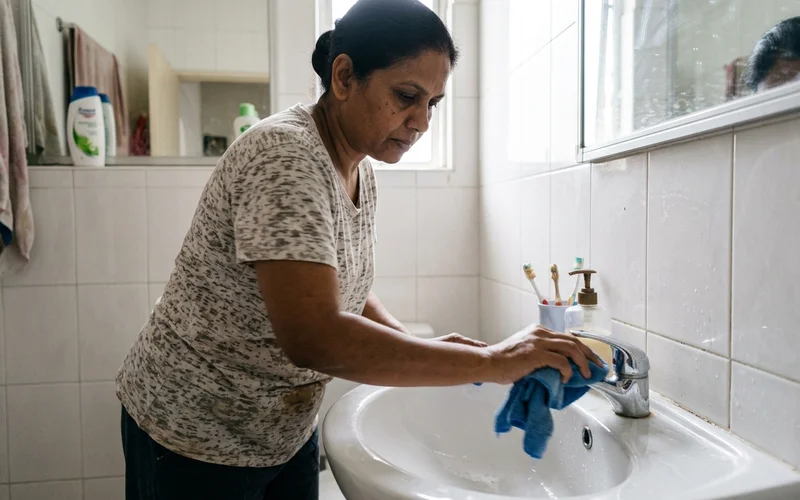
- Bathrooms and toilets — sinks, taps, mirrors, toilet bowls, shower areas, surface tiles and floors
- Kitchen and pantry — countertops, sink, stovetop surface, exterior of appliances, wiping cabinet fronts, floors
- Common areas — hallways, stairs, entrance
- Trash removal — emptying bins and replacing liners
Anything you specifically want prioritised should be mentioned at booking, so the cleaner starts there rather than working through in a default order.
Homes vs Offices: What Changes
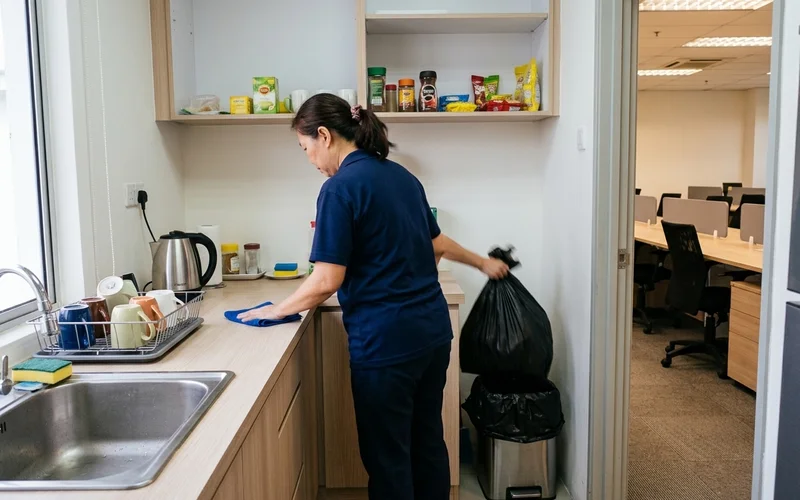
Office cleaning uses the same core list with a different emphasis. Desks, workstations and meeting rooms replace bedrooms; the pantry replaces the kitchen; and washrooms usually need more frequent attention because they take more traffic.
Glass frontage matters for shoplots, since road-facing units collect dust quickly. Bins get emptied nightly rather than weekly. And scheduling shifts to after-office hours, which is why we keep slots open up to 10:00 PM.
What’s Not Included
This is the part worth reading carefully, because it’s where expectations usually slip.
A general clean does not include:
- Inside cabinets, wardrobes, the fridge or the oven
- Range hood degreasing and heavy kitchen grease removal
- Bathroom limescale scrubbing and grout restoration
- Ceiling fans, high shelves and cornices
- Sliding door and window track clearing
- Carpet, sofa or mattress extraction
- Exterior walls, driveways or window exteriors at height
None of that is off-limits — it just belongs to a different service. Most of it falls under deep cleaning, which is the intensive reset you book once and then maintain with routine slots afterwards.
A simple way to tell them apart
If you can see dust, a general clean handles it. If you can see build-up — brown film near the stove, white scale on taps, dark grout — that’s deep-clean territory.
Add-Ons You Can Request
Detergents and equipment supply is available for an extra charge. Ironing, laundry folding, balcony cleaning and interior window cleaning can all be added if you allow hours for them in the booking.
The important thing is agreeing the scope before the cleaner arrives. Four hours is four hours — adding three extra tasks means something else gets less time. We’d rather have that conversation upfront than leave you with a half-done kitchen. If you’re still deciding on a rhythm, our guide on how often to book a house cleaner works through the usual intervals.
Ready to set up a routine slot? Browse our cleaning services in Ipoh, then send your area and rough property size and we’ll tell you how many hours it realistically needs.
How to Get the Most From Four Hours
A four-hour slot is finite, so a little preparation buys you a noticeably better result.
Clear the surfaces you want cleaned. A cleaner who spends twenty minutes moving your paperwork into neat piles has twenty minutes less for the bathroom. Counters, dining tables and floors that are clear at the start get cleaned properly.
Name your priorities. Tell us the two rooms that matter most. Every household has them, and they aren’t always the ones a default order would start with.
Deal with laundry and dishes beforehand if you can. Both eat time disproportionately, and neither is really what you’re paying a cleaner to do unless you’ve specifically asked for it.
Say what to leave alone. Delicate finishes, a shelf of ornaments, the desk with the work papers on it. It’s much easier to hear that upfront than to have a conversation about it afterwards.
For recurring bookings the same cleaner learns all of this within two or three visits, which is a large part of why we keep the same team on your booking rather than sending whoever is free that week.